
Welcome to my guide on how to invest in the Caribbean.
The Caribbean is not one single investment market. It includes independent countries, British and Dutch territories, jurisdictions using different currencies, and economies with very different tax systems, property laws and financial sectors. An investment that makes sense in Barbados may look quite different in Aruba, the Cayman Islands, Jamaica, the Dominican Republic or the smaller Eastern Caribbean islands. Investors therefore need to examine the rules and economic conditions of the individual jurisdiction rather than treating “the Caribbean” as one market.
The region does offer several investment routes. Real estate and tourism receive much of the attention, but investors can also use shares, currencies, business ownership and other financial instruments. Some opportunities provide exposure directly to Caribbean economic growth, while others simply allow somebody living in the region to invest internationally.
Real estate investment
Real estate in the Caribbean is currently in or near bubble territory. It is not unlikely that the value will continue to go up as more people try to invest in this limited resources, but there is also a real risk that the market will self correct itself downwards. Investing in Caribbean real estate is a gamble. If it is worth taking the risk depends on several factors such as where you want to invest, if you are able to find a good deal and if you are able to have a high occupancy if you choose to rent the property as a vacation rental.
That assessment should not be applied equally to every island or every type of property. Caribbean real estate markets are extremely local. A beachfront condominium in a major tourist destination can behave very differently from residential property aimed at local buyers, commercial buildings in a capital city or undeveloped land on a smaller island. Prices can also be distorted by the relatively small number of properties available in desirable coastal locations. A few large transactions can make a local market appear hotter than the broader economy would justify.
Investors should pay close attention to rental economics rather than relying only on the belief that land prices will rise. A vacation property with attractive headline rental rates can still produce a poor return after property management, cleaning, maintenance, insurance, taxes, utilities, booking platform commissions and periods without guests are deducted. Properties in highly seasonal destinations can earn most of their income during a few months of the year.
Insurance is another major factor in Caribbean property investing. Hurricanes, flooding, storm surge and other weather events can substantially change the economics of ownership. Premiums may be considerably higher for coastal properties, while the excess payable on hurricane related claims can also be substantial. Investors should establish what is actually covered rather than assuming a standard property policy provides protection against every natural disaster.
Title and ownership rules deserve the same attention. Foreign buyers can face different registration procedures, stamp duties, licence requirements or restrictions depending on the jurisdiction. Some countries operate citizenship or residency programs connected with qualifying investments, but those programs should not be the only reason to purchase an otherwise unattractive property. Legal advice from a lawyer familiar with the relevant island is generally worth the cost before a large property transaction.
Large scale investments are often lower risk than smaller investments. Investing in a development is safer than investing in a unit in said development.
Larger projects can provide diversification across several units, revenue sources or development phases, although size does not automatically make an investment safe. Development projects introduce construction risk, planning risk, financing risk and the possibility that demand does not materialize at the expected price. Investors should examine the developer’s previous projects, financing arrangements, construction guarantees and realistic sales assumptions.
Buying a single unit exposes the investor more heavily to the condition and location of that particular property. One badly positioned apartment, unexpected building assessment or extended period without tenants can materially affect the return. A larger development can spread some of these risks, but it also introduces dependence on the competence of the management company and developer.
Investors buying before construction is completed should be especially careful. Off plan pricing can be attractive, but the buyer is accepting the risk that completion is delayed or the finished development differs from what was marketed. Payment schedules, escrow arrangements and protections if the project fails should be understood before money is transferred.

Securitized investments
You can, of course, to chose to invest in regular securitized investments even if you live in the Caribbean. Most of these will have little local connection, but it is possible to invest in stock with local connections and trade with your local currency on the forex market. Some of the most common securitized investments are.
Investors living in the Caribbean are not restricted to companies or assets based in the region. Depending on local regulations and the brokerage account available to them, they may be able to buy shares listed in the United States, Canada, Europe and other major markets. This can be useful because many Caribbean economies are concentrated in tourism, financial services, commodities or a relatively small number of domestic companies.
International investments allow an investor to reduce dependence on the economy of one island. Someone who owns Caribbean property, works in tourism and holds shares in a local hospitality business already has considerable exposure to the same economic conditions. Adding overseas equities or bonds can reduce that concentration.
Currency risk should still be considered. Several Caribbean currencies are pegged to the US dollar, while other countries use floating exchange rates or the US dollar directly. An investor buying assets denominated in pounds, euros or other currencies may therefore experience gains or losses caused by exchange rate movements as well as changes in the value of the investment itself.
Stock
A stock is an ownership stake in a company. A single share usually gives you a very small stake in the company since most companies have millions or even billions of shares but as little as one share gives you the right to a small fraction of the profit of the company if the company decides to pay it to the shareholders. Most shares will also give you the right to vote at shareholder meetings.
The economic value of a share generally depends on the profits and cash flows investors expect the company to generate over time. A successful company can reinvest those profits into growth, pay dividends, repurchase shares or use a combination of these methods. Investors should therefore look beyond the share price and consider the underlying business.
Large listed companies also tend to provide more information than many private Caribbean investments. Annual reports, financial statements, regulatory filings and historical prices make it easier to compare businesses. That does not remove investment risk, but it gives investors more material with which to make a decision.
Stocks are a great way to invest that offer a good balance between risk and return. At least if you chose high-quality stocks.
Quality is not the only factor that matters. The price paid for that quality is just as important. A strong business can be a poor investment if the share price already assumes years of exceptional growth. Investors should consider valuation, debt, cash generation and the competitive position of the company rather than buying solely because the company is well known.
Diversification also matters. Holding twenty companies across different industries is generally less dependent on one corporate event than putting most available capital into one tourism company, bank or energy producer. Investors who do not want to select individual companies can also consider diversified funds or exchange traded funds where these products are available to them.
CFD
CFD certificates are a type of leveraged financial instruments. They allow you to make large profits from small fluctuation in the market value of the underlying assets. CFD trading is most suitable for active traders and day traders. Passive investors should never use them.
A contract for difference normally gives the trader exposure to the price movement of an underlying market without ownership of the underlying asset. Depending on the broker, CFDs can reference shares, stock indices, currencies, commodities and other markets. The trader deposits margin rather than the full value of the position, which is where both their appeal and their danger come from.
A relatively small market movement can create a large percentage change in the trader’s account. The same leverage that increases gains increases losses. Holding leveraged positions for longer periods can also create financing costs that make CFDs unattractive for many passive strategies.
They can be great tools if you know how to use them. If not they are weapons of mass economic destruction
That description becomes much less humorous after somebody discovers what a margin call looks like. Traders should know the position value, margin requirement and maximum amount they are prepared to lose before opening a CFD trade. Using the maximum leverage available from a broker is rarely the same thing as using a sensible amount of leverage.
High risk financial instruments
CFDs are not the only instruments where leverage or payout structures can produce losses rapidly. Binary options, highly leveraged forex positions, short dated options and certain crypto derivatives can all create a situation where a relatively small market movement has a disproportionately large effect on the account.
Binary options are particularly simple in appearance. The trader generally predicts whether an asset will meet a stated condition at a fixed time. If the prediction is correct the contract pays a predetermined return, while an incorrect prediction can result in the stake being lost. The simplicity can make them appear easier than conventional options even though the payout mathematics can work against the trader.
Anyone researching how these contracts operate can read the educational material at BinaryOptions.net, which covers binary option mechanics, markets and trading platforms. Traders should separately check whether binary options are permitted for retail customers in their country, because regulatory treatment differs substantially between jurisdictions.
The same principle applies to any high risk instrument. Knowing how a product works is separate from deciding whether it belongs in a portfolio. An instrument designed for short term speculation should not be treated as a substitute for a diversified long term investment strategy simply because the potential returns appear larger.
FOREX
The Forex market is an abbreviation for the Foreign exchange markets. The markets where different currencies are traded. It is the largest market in the world- The Forex market is not suitable for long term investments but can be a profitable place to speculate. To trade on the forex market you need an account with a good forex broker. I am personally not able to recommend any broker in particular but you can click the link to visit a site DayTrading.com where you can compare brokers and read reviews.
Foreign exchange prices represent the relationship between two currencies. EUR/USD, for example, measures the euro against the US dollar. A trader who buys the pair expects the euro to strengthen relative to the dollar, while somebody selling the pair expects the opposite.
Retail forex is commonly traded with leverage, which means the broker allows the customer to control a position larger than the amount deposited as margin. That makes position sizing especially important. A trader can make a correct long term call on a currency and still lose the trade if excessive leverage forces the position to be closed during a temporary move in the opposite direction.
Trading costs should also be included in any strategy. The bid and ask spread, commissions and overnight financing can all reduce returns. These costs become particularly important for active traders who place a large number of trades or hold leveraged positions for several days.
Choosing a broker
Choosing the financial instrument is only half the decision. The company holding the trading account also needs to be checked carefully. Broker regulation, customer asset protection, trading costs, withdrawal procedures and the products available can differ materially between firms and jurisdictions.
An investor should begin by checking which legal entity will actually hold the account. Large brokerage brands often operate through several companies, each regulated in a different jurisdiction. The regulator and licence shown in the account agreement should therefore match the company providing the service rather than another subsidiary elsewhere in the group.
Independent comparison sites can be useful during the research stage. BrokerListings.com provides information and comparisons covering online brokers and trading platforms. Resources like this can help narrow down the available choices, but the final regulatory check should still be made directly with the relevant financial authority before money is deposited.
Costs also deserve more attention than promotional headline spreads. A broker advertising very low trading costs on one popular market may charge considerably more on other instruments. Withdrawal fees, currency conversion costs, inactivity charges and overnight financing can also affect the final return.
The ability to deposit money easily should never be treated as evidence that a broker is reliable. Withdrawal procedures matter at least as much. Traders should understand which documents are required, how withdrawals are processed and whether the payment method used to fund the account affects how money can be returned.
Business investments
There are many types of Caribbean business that you can invest in.
Private business investment offers the possibility of obtaining direct exposure to the local economy in a way that international stocks do not. Hotels, restaurants, transportation companies, property services, food producers, technology firms and professional services can all benefit from economic activity within the region.
Private businesses are generally harder to value than listed companies. There may be no public market price, limited financial reporting and no easy way to sell the investment later. Investors therefore need to examine accounts, debts, ownership structure, licences and contracts carefully.
The people running the company are often as important as the business idea. A profitable business can be damaged quickly by poor accounting, weak cash controls or disagreements between shareholders. Written shareholder agreements and clearly defined rights become particularly important when several investors are contributing capital.
Investors should also consider how they will eventually exit the investment. A listed share can normally be sold on an exchange. A minority interest in a small Caribbean company might have no obvious buyer. Returns can therefore depend heavily on dividends or on another shareholder agreeing to purchase the stake.
Fishing
Fishing can be a lucrative industry to invest in but shrinking fish stocks and new restrictions and quotas make this a dangerous business to invest in. I do not recommend that you invest in fishing related enterprises. The one exception from this rule is if you want to invest in a fishing charter company for tourist. This is a growth industry.
Commercial fishing has several risks beyond changes in fish stocks. Fuel prices, boat maintenance, insurance, licensing requirements and weather can all affect profitability. A vessel that cannot operate for several weeks because of mechanical problems can create substantial fixed costs without producing revenue.
Environmental regulation also needs to be considered. Caribbean governments have an obvious interest in protecting fisheries that support food supply, tourism and marine ecosystems. Quotas, protected areas and seasonal restrictions can therefore change what fishing businesses are permitted to catch.
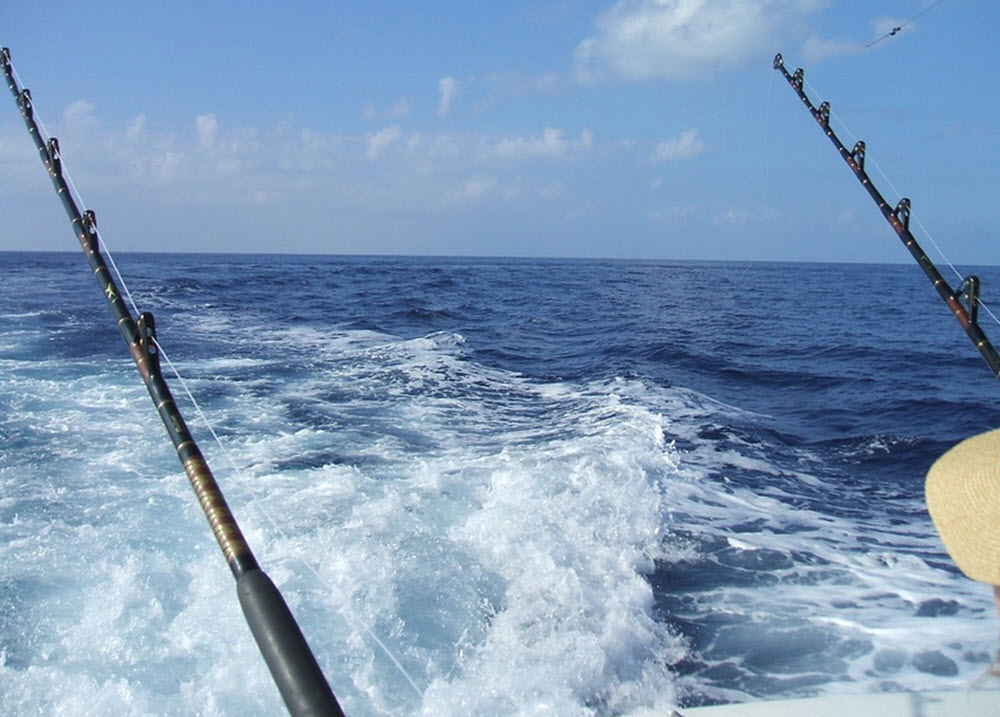
Fishing charter operations have a different business model because customers are paying for an experience rather than only for the fish that are landed. Successful operators can generate revenue from tourists even when individual catches vary. They can also combine fishing with sightseeing, private boat hire and other marine activities.
The risks do not disappear. Boats are expensive assets, maintenance in salt water is relentless and weather can cancel bookings during periods when tourist demand would otherwise be strong. Investors should examine vessel utilization, captain experience, marina fees, insurance and booking channels before assuming attractive charter prices translate into attractive profits.
Tourism
Tourism is an will remain a great business to invest in. Caribbean will remain a very popular destination for US and European tourists. Make sure to vet your investment well. It is a good industry that contains a lot of bad business that you should avoid investing unless you have the time to turn them around yourself.
Tourism supports a much wider group of businesses than hotels and resorts. Restaurants, transport companies, tour operators, boat charters, property managers, diving businesses, entertainment venues and specialist retail businesses can all benefit from visitor spending. Some require much less starting capital than buying or developing a hotel.
Location still matters enormously. A good tourism business in the wrong location can struggle because tourists never encounter it. Proximity to cruise terminals, airports, resorts, beaches and established visitor areas can determine how much has to be spent on marketing simply to generate customer traffic.
Seasonality is another factor investors should model carefully. A business can appear extremely profitable during the high season but struggle with fixed costs when visitor numbers fall. Rent, salaries, equipment financing and insurance usually continue even when bookings slow. The investment therefore needs enough working capital to survive weaker months without relying constantly on additional shareholder funding.
Dependence on one type of visitor creates another risk. A business relying almost entirely on cruise ship passengers can suffer if cruise itineraries change. A luxury villa operator depending mainly on North American visitors can be affected by recessions or changes in airline capacity. Businesses serving both visitors and local residents may have a more stable revenue base.
Air access is particularly important for island economies. New direct routes can increase tourism demand quickly, while the cancellation of a major route can have the opposite effect. Investors considering a tourism project should therefore examine not only current visitor numbers but also airport capacity, airline connections and planned hotel developments that may increase or reduce local demand.
The quality of management can be more important than the concept itself. Tourism businesses generate many small daily transactions, employ seasonal staff and rely heavily on customer reviews. Poor operational control can turn an apparently attractive business into an expensive hobby surprisingly quickly.
Balancing Caribbean investments with international assets
Investors who live or work in the Caribbean often already have more Caribbean exposure than they realise. Their salary may depend on the local economy, their home is a local property and their private business might depend on tourism. Buying another local property or investing in another tourism company can increase that concentration further.
International investments can therefore serve a useful role even when the investor remains optimistic about the region. Holding shares, funds or other assets linked to different countries and industries reduces dependence on a single economy. This does not guarantee a positive return, but it changes where the portfolio’s risks come from.
Liquidity also deserves attention. Caribbean property and private business investments can take months to sell, especially during weak economic conditions. Listed securities are normally easier to convert into cash. Maintaining a mixture of liquid and illiquid investments can prevent an investor from being forced to sell a property or business interest at an unattractive price when cash is needed.
The appropriate mixture depends on the investor’s income, time horizon and ability to absorb losses. Someone with secure income and a long investment period may be comfortable holding more illiquid assets than somebody who expects to need capital within a few years.
There is no single best way to invest in the Caribbean. Real estate may suit an investor who understands local property and tourism economics. Listed shares can provide easier diversification and liquidity. Private businesses can produce strong returns for investors who know the market and management team, while leveraged instruments such as CFDs, binary options and forex are better treated as speculative products rather than substitutes for long term investing.
The important part is separating the attractiveness of the Caribbean as a place from the attractiveness of a particular investment. A beautiful beach does not make an overpriced condominium cheap, and a busy tourist season does not make every restaurant profitable. The numbers still need to work.